
Disclosure: As an Amazon Associate I earn from qualifying purchases. How this site works
Lead Size and Grade Guide
The right lead matters as much as the pencil.
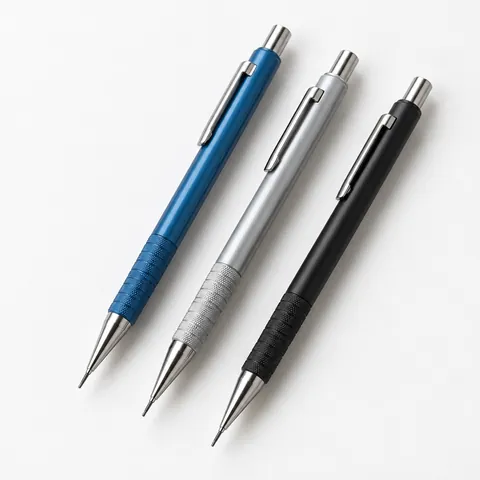 Rotating-lead pencils
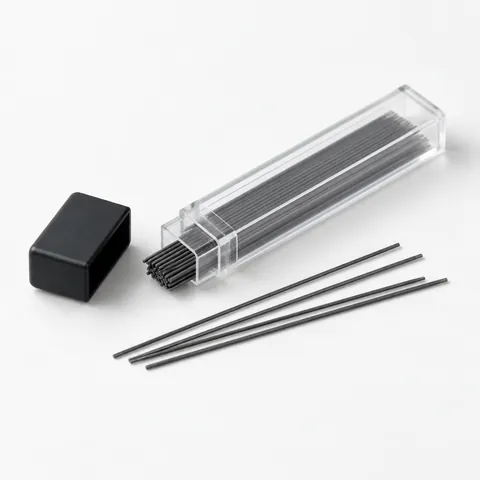 Mechanical pencil leads
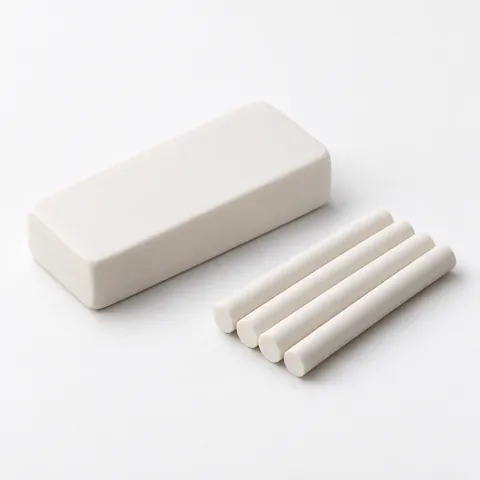 Erasers and eraser refills
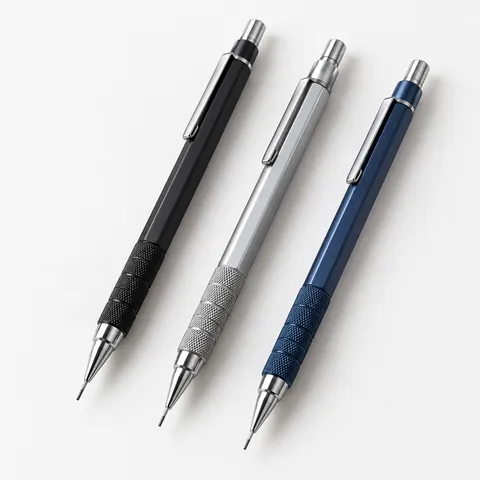 Drafting mechanical pencils
Size first
- 0.3 mm for fine detail
- 0.5 mm for everyday writing
- 0.7 mm for strength and smoothness
- 0.9 mm+ for sketching
Then grade
Harder leads (H) are lighter and stay sharp; softer leads (B) are darker and smoother but smudge more. HB is the balanced middle.
See refill leads.
What mechanical pencil lead size should I use?
Start with the pencil you already own: the barrel or clip often lists the required diameter. Mechanical pencils are not adjustable across sizes, so 0.5 mm lead will not work correctly in a 0.7 mm pencil, and 0.7 mm lead will not fit through a 0.5 mm tip.
| Use | Good starting size | Why it works |
|---|---|---|
| Small handwriting, planners, margin notes | 0.3 mm or 0.5 mm | Keeps letters tight and reduces crowding |
| School notes, office writing, general use | 0.5 mm or 0.7 mm | Balances line control with fewer breakages |
| Heavy hand pressure | 0.7 mm or 0.9 mm | Thicker lead tolerates more force |
| Math, diagrams, technical drawing | 0.3 mm or 0.5 mm | Makes clean symbols, labels, and thin construction lines |
| Loose sketching and shading | 0.7 mm, 0.9 mm, or larger | Lays down broader marks and feels smoother |
If you are choosing one size for a bag, desk, or student pencil case, 0.7 mm is the safer choice for people who press hard. If you write lightly and want a narrower line, 0.5 mm is usually the more precise everyday choice. Buy refill leads in the exact diameter printed on the pencil.
What do lead grades mean for darkness and smudging?
Lead grade describes hardness, not size. A 0.5 mm HB and a 0.7 mm HB are the same general hardness, but the wider lead can look darker because it puts down a broader line.
- H grades are firmer and lighter. They are useful for guide lines, diagrams, forms, and writing that needs to stay cleaner on the page.
- F is a firm middle grade. It can work well for small writing when HB feels too dark or soft.
- HB is the default grade for many writers because it is dark enough to read without smearing as much as softer grades.
- B grades are softer and darker. They feel smoother but can leave more graphite on your hand, the facing page, or a ruler edge.
The best grade also depends on pressure. A heavy writer may find HB dark enough and may break fewer leads by moving to a thicker size rather than a softer grade. A light writer may prefer B or 2B because it makes a readable line without pressing harder. If your notes look pale, try one step softer before changing pencil size.
How do I choose lead for paper, tests, and scanning?
Paper texture changes how a lead behaves. Smooth paper can make hard lead feel slippery and pale, while rough paper pulls off more graphite and makes the same grade look darker. Thin paper also shows smears and impressions more easily, so pressing harder is not always the answer.
- Check any rule first. For tests, official forms, or scan sheets, follow the instructions exactly. If they require a specific pencil type, do not assume a mechanical pencil is accepted.
- Write one sentence on the actual paper. Look for darkness, skipping, scratchiness, and whether the point digs into the sheet.
- Rub a clean finger or scrap paper over the line. If it smears too much, move harder by one grade or use a thinner line.
- Erase a small mark. Softer grades often leave more residue, especially on cheaper paper.
- Use a straightedge test if you draw diagrams. Soft leads can smear along rulers; hard leads keep edges cleaner.
For notes that may be scanned or photographed, readability matters more than maximum darkness. A consistent HB or B line is usually easier to capture than pale hard marks, but very soft grades can blur if the page is handled a lot before scanning.
How can I stop mechanical pencil lead from breaking?
Breakage usually comes from a mismatch among lead size, pressure, angle, and how far the lead is extended. The lead should stick out only a short distance beyond the tip. If several millimeters are exposed, it will snap even if the lead itself is not defective.
- Click less lead out. Advance it in small amounts and write until the sleeve or tip is close to the page.
- Use a larger diameter if you press hard. Moving from 0.5 mm to 0.7 mm often helps more than changing grade.
- Try a slightly harder grade if soft lead crumbles under your hand pressure.
- Hold the pencil a little more upright for very thin sizes. A low writing angle puts sideways force on the lead.
- Keep spare lead clean and unbent. Do not force a broken piece into the mechanism.
- If one pencil keeps jamming, empty it and reload fewer pieces. Overfilling can stop the feed from working smoothly.
A rotating-lead pencil can help writers who wear one side of the point into a chisel shape, because it keeps the line more even as you write. If that is your main problem, compare rotating-lead pencils with the size and grade you already like rather than changing everything at once.
What should I keep with refill leads?
A small lead container is enough for daily writing, but keep the label or mark the tube with both size and grade. Loose lead is easy to mix up, and the difference between 0.5 mm and 0.7 mm is not worth guessing when a jammed pencil is the result.
Pair the lead with an eraser that suits the work. Small built-in erasers are convenient for a word or two, but they wear quickly and can harden with age. For notes, homework, drafting, or sketching, a separate eraser gives better control and keeps the pencil cap and feed cleaner. See erasers and refills if your pencil eraser is worn down or unavailable.
Frequently asked questions
Is 0.5 mm or 0.7 mm lead better?
Choose 0.5 mm if you write small, want crisp lines, or use narrow spaces. Choose 0.7 mm if you press hard, break lead often, or prefer a smoother, bolder line. Neither is universally better; it depends on handwriting size and pressure.
Can I put a different size lead in my mechanical pencil?
No. Mechanical pencils are built for one lead diameter, and the size must match the clutch, sleeve, and tip. Using the wrong size can cause slipping, jams, or lead that will not feed at all.
What is the darkest mechanical pencil lead?
Softer B grades are darker than H grades, and higher B numbers are generally darker and softer. The trade-off is more smudging, faster wear, and a higher chance of messy erasing. For everyday writing, try B or 2B before going much softer.
Why does my mechanical pencil lead feel scratchy?
Scratchiness can come from a hard grade, rough paper, a sharp worn edge on the lead, or too little lead extending from the sleeve. Try HB or B, rotate the pencil slightly as you write, and make sure the metal sleeve is not scraping the paper.
Disclosure: As an Amazon Associate I earn from qualifying purchases. This site may earn a commission when you buy through its links, at no extra cost to you. Product details come from public manufacturer information; always check the merchant page for current specifications and prices. We have not hands-on tested the products described here.